
Nature Breathing Exercises for Kids: Printable Cards
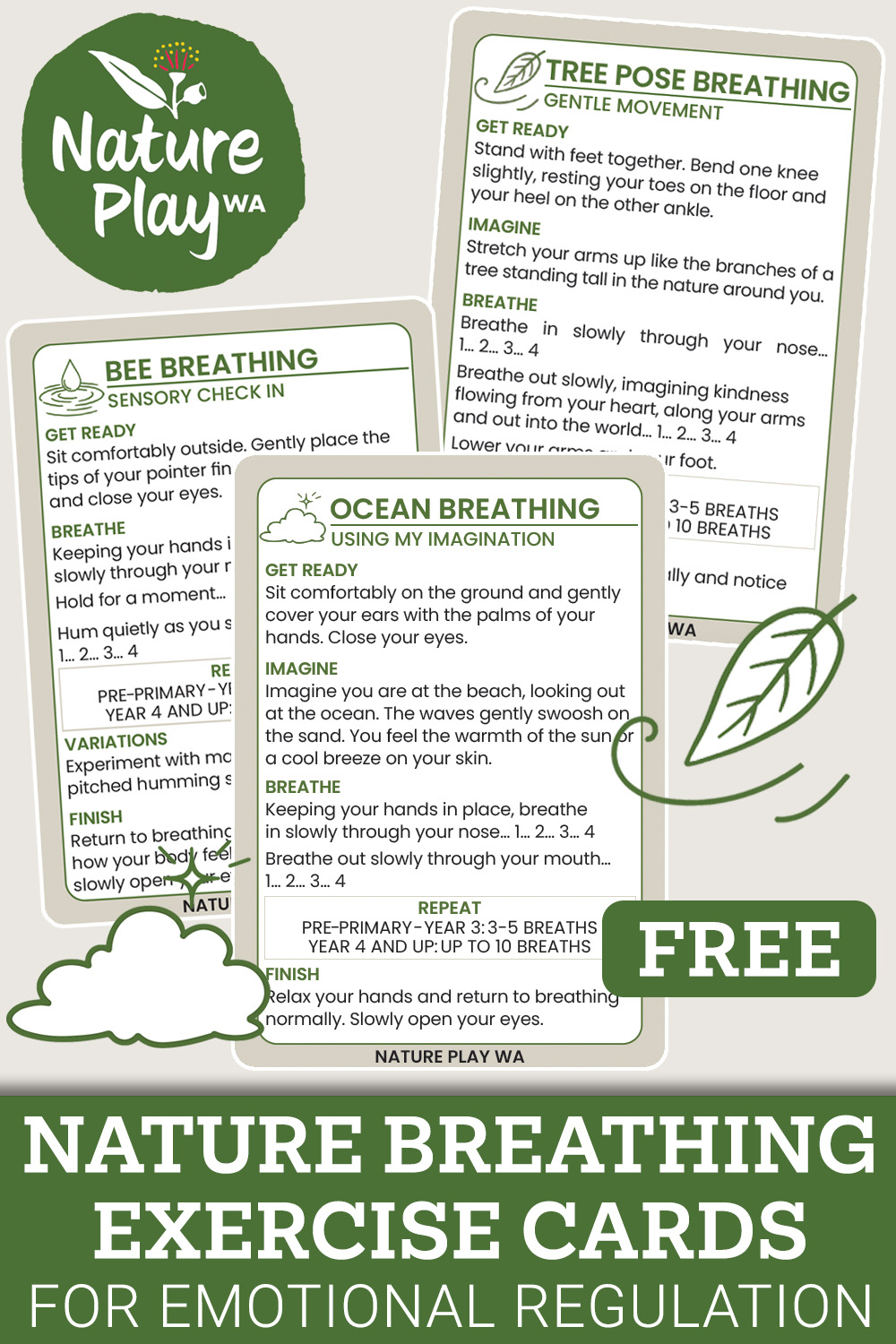
Perfect for outdoor use, these eight breathing exercise cards use simple, nature-inspired prompts to introduce children to breathing as an emotional regulation tool. Regular practice of breathing exercises can also help to support students’ self-awareness, focus, and readiness to learn.
With research on nature-based interventions suggesting that spending time in natural environments can reduce feelings of stress and promote relaxation, taking students outdoors to practise breathing exercises is a wonderful way to make the experience feel both authentic and natural.
Breathing for Self-Regulation
Breathing is a simple, portable skill that children can learn to use to help manage their emotions and responses to everyday situations. Its portability makes breathing an excellent self-regulation tool to take outdoors.
Learning to notice their breathing can help children recognise changes in their bodies, create a moment between feeling and reacting, and practise settling their nervous system when they feel overwhelmed, frustrated or anxious. With regular practise, breathing can become a familiar self-regulation tool that children can draw on independently when they need it.
Why Nature Prompts?
Nature provides a wonderfully familiar, engaging focus for children’s breathing exercises, helping children connect their breath with easily recognisable elements they can see, hear, feel or imagine.

Imagery such as buzzing bees, warm sunshine or tall trees can make a breathing experience more tangible and memorable, while also encouraging children to notice their surroundings and engage with their senses.
The eight breathing prompts included in this resource are:
- Bee breathing
- Sunshine breathing
- Rainbow breathing
- Butterfly breathing
- Tree pose breathing
- Ocean breathing
- Flower breathing
- Five senses breathing
Tips for Using Nature Breathing Exercises
Make Self-Regulation Routine
Embedding breathing exercises into everyday classroom routines helps to normalise their use and increase the likelihood that students will draw on them independently when needed for self-regulation.
A breathing exercise can make a positive addition to:
- morning meetings,
- transition times,
- after recess or lunch,
- before beginning a challenging task, or
- as part of an end-of-day reflection.
Rather than reserving breathing exercises for moments of distress, practising them regularly during calm periods helps children to build familiarity and confidence with breathing as a calming technique.
Choose just one breathing exercise to focus on for each practice period and provide students with plenty of opportunity to know that exercise well before introducing a new technique.
For school-age children, breathing activities are most effective when the practice session lasts between one and five minutes. You will see most of the cards include the following recommendation for repeating an individual breathing exercise:
- Pre-primary to Year 3: 3-5 breaths
- Year 4 and up: Up to 10 breaths
Take Students Outdoors
Practising breathing exercises outdoors offers students a change of environment, with fresh air, natural sights and sounds to support relaxation and help them focus on their breathing. You don’t need a dedicated nature space to practise breathing outdoors. A garden, playground or oval edge, courtyard or space under a shady tree will work.
Model Participation
Teacher modelling plays an important role in helping children engage with breathing exercises.
Students benefit when educators participate alongside them, using a calm tone for instructions and ensuring a positive, supportive atmosphere. The instructions included on each breathing exercise card act as a script for you to use to guide students through the exercise.
Take a Moment for Reflection
Breathing practices are most effective when paired with opportunities for reflection and emotional literacy. Following an exercise with a simple, reflective question encourages students to build self-awareness and emotional vocabulary. You might like to try:
- What do you notice in your body now?
- How has your breathing changed?
- When might be a helpful time for you to use this breathing exercise?
Adapting to Meet Diverse Needs
Each child responds differently to breathing and mindfulness activities. Some students regulate best through movement rather than stillness, whilst others benefit from visual supports, physical props or shorter activities.
To help support student autonomy with nature breathing exercises, we suggest:
- making participation invitational
- offering students choices, such as keeping their eyes open, moving into a more comfortable position (e.g. sitting, standing or lying), or simply observing quietly.
Download Nature Breathing Cards

Download the breathing exercise cards as a full colour PDF for printing;
For more support developing social emotional learning skills, check out these relevant resources (click on an image below to be taken to the related article):

Or see all of our Social Emotional Learning in Nature articles;
