
More Than Just Play: How Nature Supports Social Emotional Learning
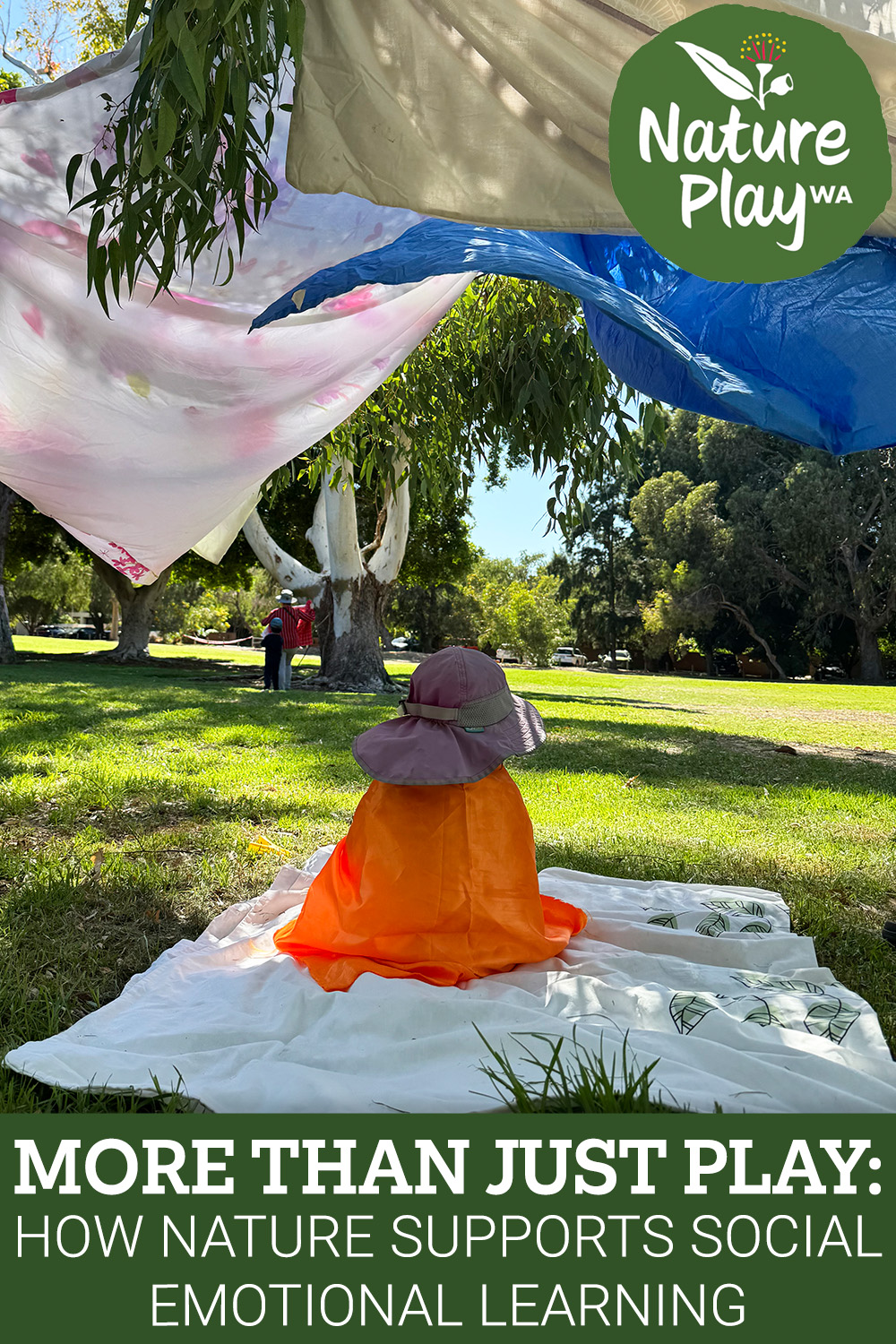
One morning I noticed a pair of children lying beneath a shady tree in a corner of the playground, watching the leaves dance in the breeze. I watched one point to a bird overhead before the quiet settled over them again.
There was no planned activity, no learning intention, and nothing to achieve. Just children enjoying a peaceful moment outdoors.
It reminded me that while nature play is often celebrated for its benefits to physical health and opportunities for adventure, it can also offer children something equally valuable – regular, everyday opportunities to practise skills that underpin both social and emotional learning.
How Nature Play Supports Social Emotional Learning
Research suggests that nature supports social emotional learning through a range of complementary pathways. Rather than benefiting children in just one way, natural environments create opportunities for physical activity, sensory engagement, problem solving, social connection and quiet reflection. Together, these experiences support emotional health and wellbeing, social connectedness and learning readiness – all important elements of social emotional learning.
Below you’ll find seven ways nature learning and outdoor play can support the development of these social and emotional pathways, along with suggestions for simple ways schools and teachers can maximise social emotional learning outdoors.
1. Feeling Calm & Happy: Emotional Wellbeing
Emotional wellbeing encompasses the ability to identify, manage and express one’s feelings in healthy ways while coping with the everyday stresses of life.
Research on nature-based interventions suggests that spending time in natural environments can reduce feelings of stress and promote relaxation. Broader research has also found that exposure to nature is associated with increased positive emotions, such as happiness and vitality, and reduced negative emotions including anxiety, anger and sadness.
A muddy puddle, a shady tree, a collection of leaves or a quiet patch of garden can all offer children opportunities to experience joy, curiosity, calm and connection.
Child-directed play in open-ended outdoor environments provides children space to choose what to do, follow their interests, take manageable risks, solve problems and play in ways that feel enjoyable and meaningful, further contributing to time experiencing those all-important positive emotions.
Importantly, spending time outdoors can also provide relief from the structure and sensory stimulation of busy indoor environments. Heading outdoors, even for a short time, can create space for a lower stimulation pause, gentle movement or play.
Try it today:
- Take a quiet, ten-minute nature walk after a lesson requiring substantial focus and concentration.
- Invite students to sit somewhere outdoors and notice five things they can see, hear or feel.
- Create a quiet nature space where students can independently spend a few minutes.
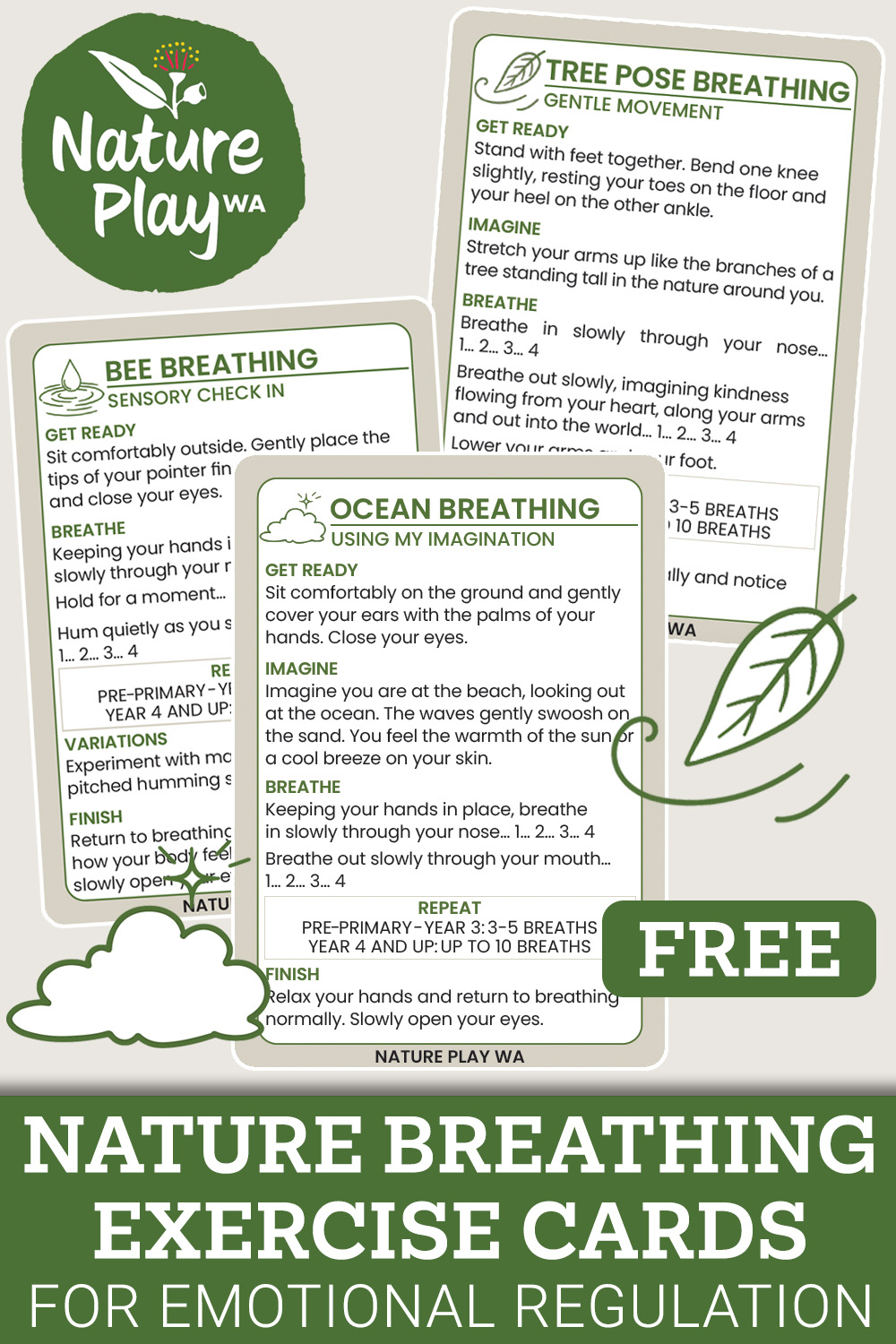
- Use a short nature-based breathing activity before returning to learning.
Make outdoor time part of the school day routine. Look for small pockets of time when students can regularly spend time outdoors.
2. Managing Big Feelings: Emotional Regulation
Emotional regulation involves children learning to recognise and understand their feelings, and developing strategies to respond to emotions in ways that help them manage everyday experiences and challenges. This doesn’t mean children should always feel calm or avoid big emotions. It means gradually learning how to recognise what they’re feeling, express those feelings appropriately and find helpful ways to respond.
Research currently suggests a small but significant positive relationship between children’s exposure to nature and self-regulation, with nature supporting regulation through reduced stress, experiencing positive emotions, movement, and opportunities to restore calm and focus.
Nature play naturally brings moments of excitement, frustration, uncertainty, disappointment, and social conflict. A stick structure collapses. Someone else wants the same digging tool. A child isn’t sure whether they can make it across a log. The game doesn’t go to plan. In these and many similar scenarios, outdoor environments provide children with useful opportunities to experience a range of emotions and practise regulation.
And, with appropriate support, these experiences help children to notice how they feel, pause, adapt, solve problems and try again.

Natural spaces can also become familiar places children associate with slowing down, moving their bodies or taking a short break when emotions feel overwhelming. By regularly practising simple outdoor regulation strategies when children are calm, teachers and parents can help them recognise time outdoors as a tool they can use to manage big feelings.
Try it today:
- Take a short Talk N Walk as a class or in pairs with our Talk N Walk cards or app.
- Try a weather check-in: “What is the weather doing? What is your body doing?”
- Help students to identify the value of nature as a regulation tool by asking, “What did you notice happening in your body while we were outside?” upon returning inside.
3. Building Resilience
Resilience develops through opportunities to experience manageable challenges, make decisions, solve problems, recover from setbacks, and discover that one can cope in the face of adversity.
Everyday nature play provides children with repeated opportunities to engage with and learn from the natural environment.
They might find a different route across a rocky space after deciding the first feels too difficult, get wet or muddy unexpectedly, have a game that doesn’t go their way or watch their carefully constructed cubby keep blowing over in the wind.
These are not major adversities, and they don’t need to be. They are manageable moments in which children can practise adapting their plans, tolerating frustration, asking for help, trying another strategy, persisting, and communicating their thoughts and needs.
Try it today:
- Group students and provide them with a problem with no single, correct solution. For example;
- Move a medium sized rock or stick from one place to another without using your hands.
- Find three ways to cross a designated space without touching the ground.
- Build the tallest freestanding structure you can using sticks and other fallen materials.
- Then ask:
- What was difficult?
- What did you try when it didn’t work?
- What helped you keep going?
Don’t rush to solve manageable outdoor challenges. When students encounter a problem, pause before stepping in. Ask, “What could you try?” and give them time to work through possible solutions.
4. Growing Confidence
Confidence develops when children have opportunities to do things for themselves and discover, through experience, both “I can do this” and “I did it!”
Nature provides countless opportunities for small experiences of mastery as children climb, balance, build, navigate, carry, investigate, make decisions and more.

Importantly, many outdoor challenges are adaptable. One child might balance along a low log while another chooses a more difficult route. One group might build a tiny shelter while another attempts one large enough to sit inside. The child, or group, can choose their own level of challenge based on what feels challenging but also manageable for them.
When children can choose an appropriate level of challenge, experience success and gradually attempt something more difficult, competence and confidence develop through experiences of capability. Parents and teachers can support this process by noticing persistence, problem-solving and progress rather than focusing on who went highest, fastest or furthest.
Try it today:
- Set up a simple balance route using existing features of your outdoor space.
- Challenge students to move an awkward object safely with a partner.
- Invite students to choose something outdoors they would like to become better at over several sessions.
- Ask afterwards, “What can you do now that felt difficult when you first tried it?”
5. Learning & Playing Together: Developing Social Skills
Research links nature-based learning and outdoor play with positive social outcomes including cooperation, prosocial behaviour, peer relationships and social competence.
Play in natural environments is generally open-ended and flexible. A pile of sticks doesn’t tell children how it should be used. Working together to turn those sticks into a cubby, imaginary camp, obstacle course or sculpture requires children to contribute ideas, listen to others, negotiate and cooperate towards a shared goal
Importantly, outdoor play doesn’t always unfold smoothly, and there is great value in this.
Children may need to decide whose idea to try, work out how to share limited materials, include others, resolve a disagreement or change their plans when something isn’t working. These small, authentic social challenges provide opportunities to consider another person’s perspective, communicate their own needs, compromise and find solutions together.
With regular opportunities to play, explore and work together outdoors, children can practise these social skills repeatedly, across different situations and with different people.

Try it today:
- Provide sticks, stones, leaves, bark, seed pods or other locally appropriate natural loose parts for regular opportunities for free play.
- Set a small-group building challenge with no assigned roles and observe how students organise themselves.
- Use partner nature activities, like our Nature Pause Partners Cards, that require one student to notice or describe something while the other listens and responds.
6. Learning to Care: Developing Empathy
Empathy involves noticing and responding to the experiences and needs of others. Nature provides an interesting context for developing this awareness as children learn to look beyond themselves.

Research suggests that children’s experiences in nature may support caring behaviours towards both other people and the natural world. Studies have linked children’s exposure to green space with prosocial behaviours such as helping, sharing and cooperating, while broader research has found that people who feel more connected to nature also tend to report greater empathy and prosocial behaviour towards others.
At the same time, regular experiences with plants, animals and natural environments can strengthen a child’s connection with the natural world, especially with regard to care and concern for the environment.
For children, these two forms of care can develop alongside one another. Noticing that a friend needs help, carefully returning a creature to its habitat or working together to care for a garden all encourage children to look beyond their own immediate wants and consider the needs of other people, living things and shared places.
This can translate into building caring acts into everyday routines for schools, like those suggested below. These experiences help broaden children’s circle of attention from “What do I want?” towards “What does this person, creature or place need?”
Try it today:
- Before moving a natural object, ask aloud, “Who (or what) might be using this?”
- Gather only fallen natural objects for loose parts play, and practise returning logs, rocks or habitat materials after investigating beneath them.
- Visit the same outdoor spot for five minutes each week and notice what has changed.
- Give students responsibility for caring for a small garden bed or other outdoor space.
- Before leaving a natural space ask, “What can we do so this place is ready for whoever comes next?”
7. Finding Focus: Attention & Learning Readiness
Attention is a limited resource. After concentrating for extended periods, ignoring distractions and moving through a busy school day, it is understandable that children can become mentally fatigued.
Reviews of the research generally suggest beneficial links between nature exposure and children’s attention and cognitive functioning. It is worth considering the role nature can play in the recovery of attention through reducing stress and allowing children to engage in a much softer form of attention that does not require the same sustained mental effort as many classroom tasks.
Movement outdoors can also support learning readiness. When concentration begins to fade, a short outdoor break with an opportunity to move can be a fabulous reset before returning to learning, ready to focus again.
For teachers, this makes outdoor time a valuable tool for preparing children for learning. Short outdoor breaks can be used strategically before tasks requiring sustained concentration, after long periods of seated work or when attention is beginning to fade.
Try it today:
- Take a five-minute sensory walk between lessons.
- Spend two minutes watching clouds, leaves, shadows or birds before returning inside.
- Experiment with taking part of a lesson outside rather than treating outdoor time as something that happens only when the work is finished.
For schools and teachers, an important reminder is that providing opportunities for the development of these benefits doesn’t require elaborate outdoor programs or a national park visit. A school garden, patch of grass, shady tree, collection and play with natural loose parts, or regular walks around the school grounds all provide opportunities for meaningful outdoor experiences.
And, while no single outdoor play or learning experience will build resilience, emotional regulation, confidence or empathy alone, repeated opportunities to practise these skills through movement, play, challenges, relationships and meaningful experiences outdoors can make nature a valuable part of a school’s approach to social and emotional learning.
For more support developing social emotional learning skills, check out these relevant resources (click on an image below to be taken to the related article):

Or see all of our Social Emotional Learning in Nature articles;
