Tree Climbing Tips for Kids
On a recent family holiday my kids found it bemusing that I was paying so much attention to trees. We were in one of the most densely populated cities of the world. The local government had undertaken a streetscaping project more than ten years earlier and watching the trees and plants grow and thrive has been a source of absolute delight for me each time we visit.
Did You Know?
The WA State Government has committed to a 30% tree canopy by 2040, transforming Perth from the most barren city in Australia to one of the greenest.
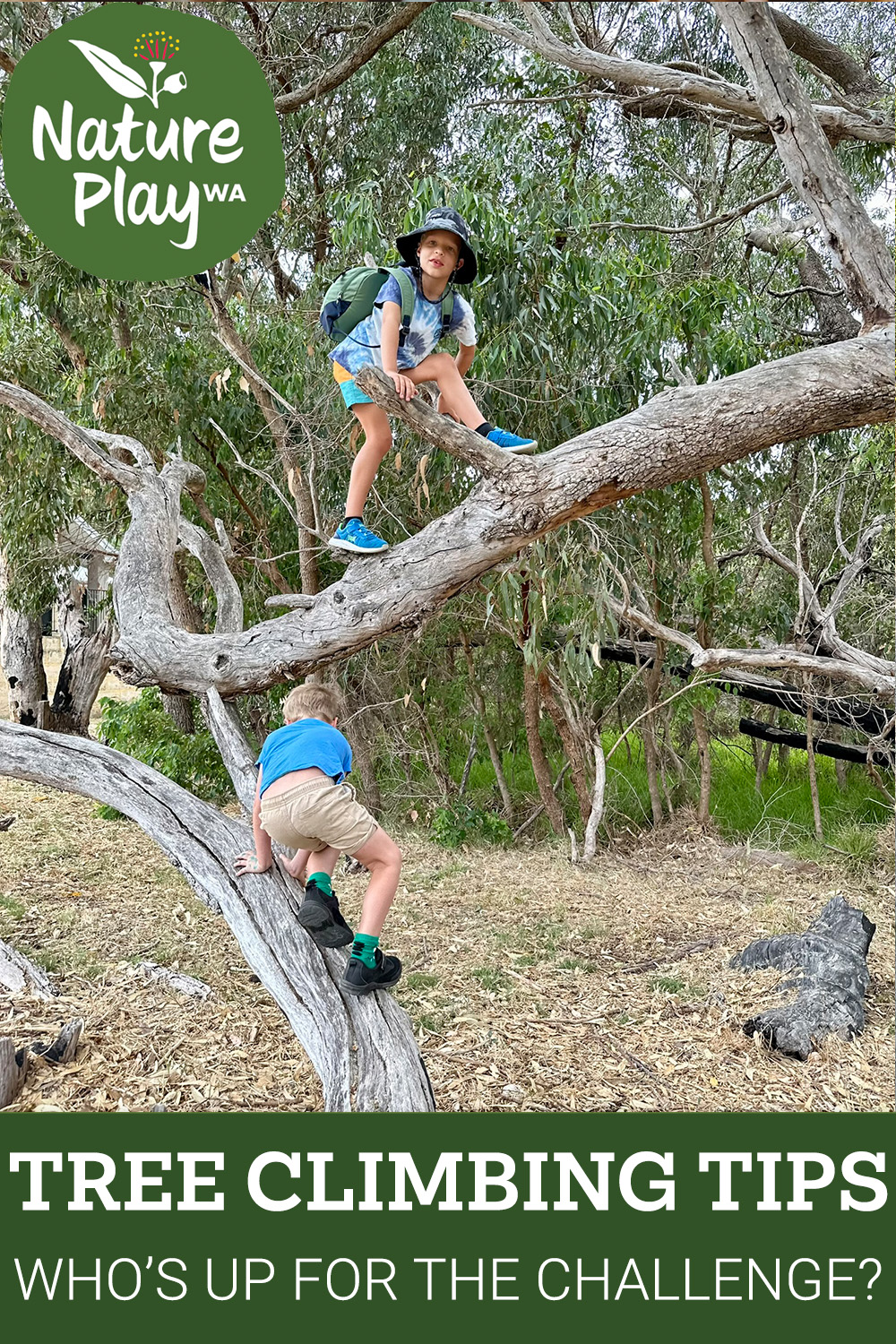
In Nature Play WA’s consultation with kids, we often ask kids to describe what they’d like their places and spaces to look like, and they always, without fail, say more trees. When they draw trees, they draw them tall and grand with huge canopies and usually with birds in them and families under them. Kids intrinsically know the value of trees.
Babies are delighted by their gentle movement, bigger kids love the infrastructure they provide for cubbies, nature-based currencies and craft materials. They make the perfect home base for games and imaginary play.
Some kids are lucky enough to also know that trees are the ultimate climbing frame. But many don’t know this because we adults have never shared that delightful little secret with them. I suspect that we tend to keep that secret to ourselves as we are scared of risk.
Tree Climbing Tips
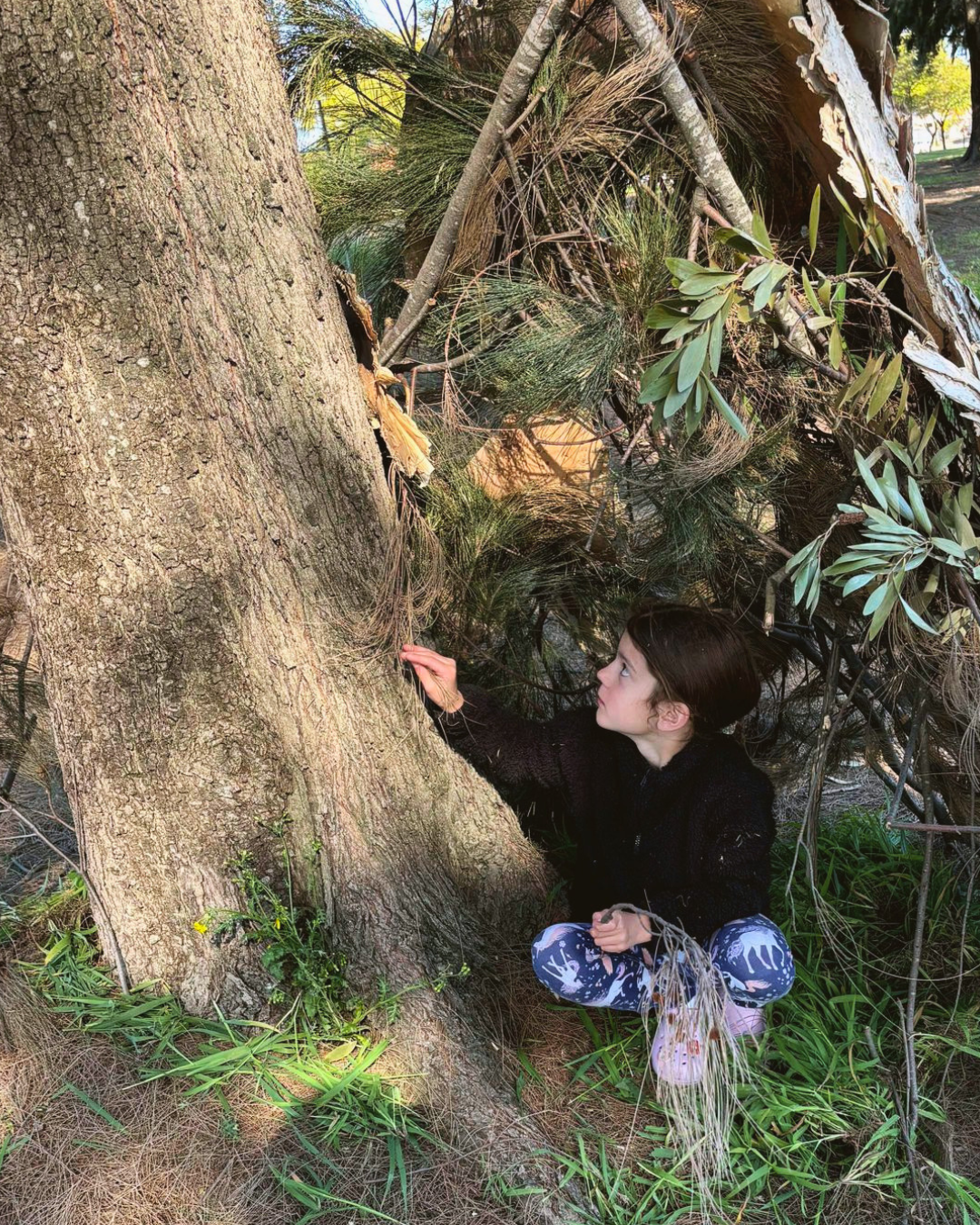
The good news is that there are a few basic things we can do to provide our kids with the joy of climbing and playing in trees that will limit the chances of a fall. Young climbers need to find the tree that is right for them; it may take some exploring and trialing to find the right one. Look for:
- A tree with grass or leaves underneath it.
- A tree with a first branch that your climber can get to unassisted. Don’t lift them. If they can’t climb to the first branch, then they aren’t big enough for that tree and need to find a tree with a lower branch.
- A tree with branches thicker than the climber’s thigh (to hold their weight).
- Climbers need to keep three points of contact as they climb – two hands, one foot, or two feet one hand, or a bottom, hand and foot.
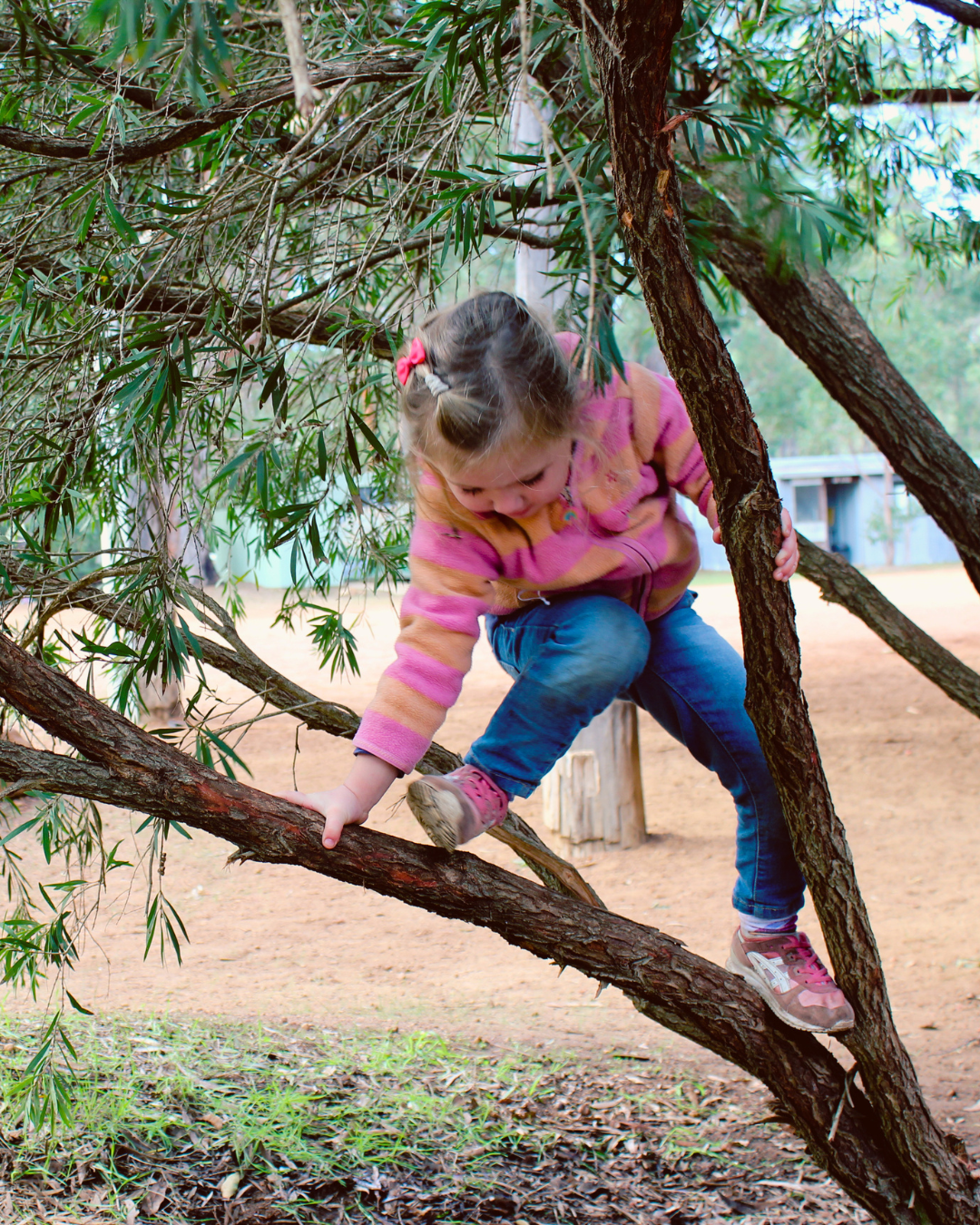
Once you’ve identified a suitable tree, use encouraging language like “What a gorgeous tree! How about we try it and see if it’s a good tree for you.” This kind of language also helps the kids to feel a connection to trees and place, which research shows us helps with resilience and well-being.
Top Climbing Tip
Climbers need to keep three points of contact – two hands and one foot; two feet and one hand; or a bottom, hand and foot.
Supporting Kids As They Climb
Many kids need to be encouraged to explore and try when starting out on tree climbing adventures. Support your children as they climb by using positive language and building a sense of adventure. Instead of saying “be careful”, try checking in with these questions:
- “How do you feel?”
- “What’s your next move?”
- “Have you got your three points of contact?”
Other Tips to Remember
- Children of all ages need to be encouraged to listen to themselves. Kids have a natural instinct to be cautious of heights. If their inner climber says it isn’t safe, it means this is not the right tree at this moment.
- The childhood right to climb a tree comes with tree-caring responsibility. Developing a sense of respect and care for trees is just as important as the physical development that allows for more adventurous climbs. Adults have an important role in helping young climbers to understand this and ensure trees and wildlife aren’t negatively impacted.
- Trees don’t need to be conquered, they should be enjoyed, and it is the climber who should determine whether it’s an enjoyable experience or not. As their skill, strength and confidence grows, so will their desire to branch out and try different trees and different climbing play.
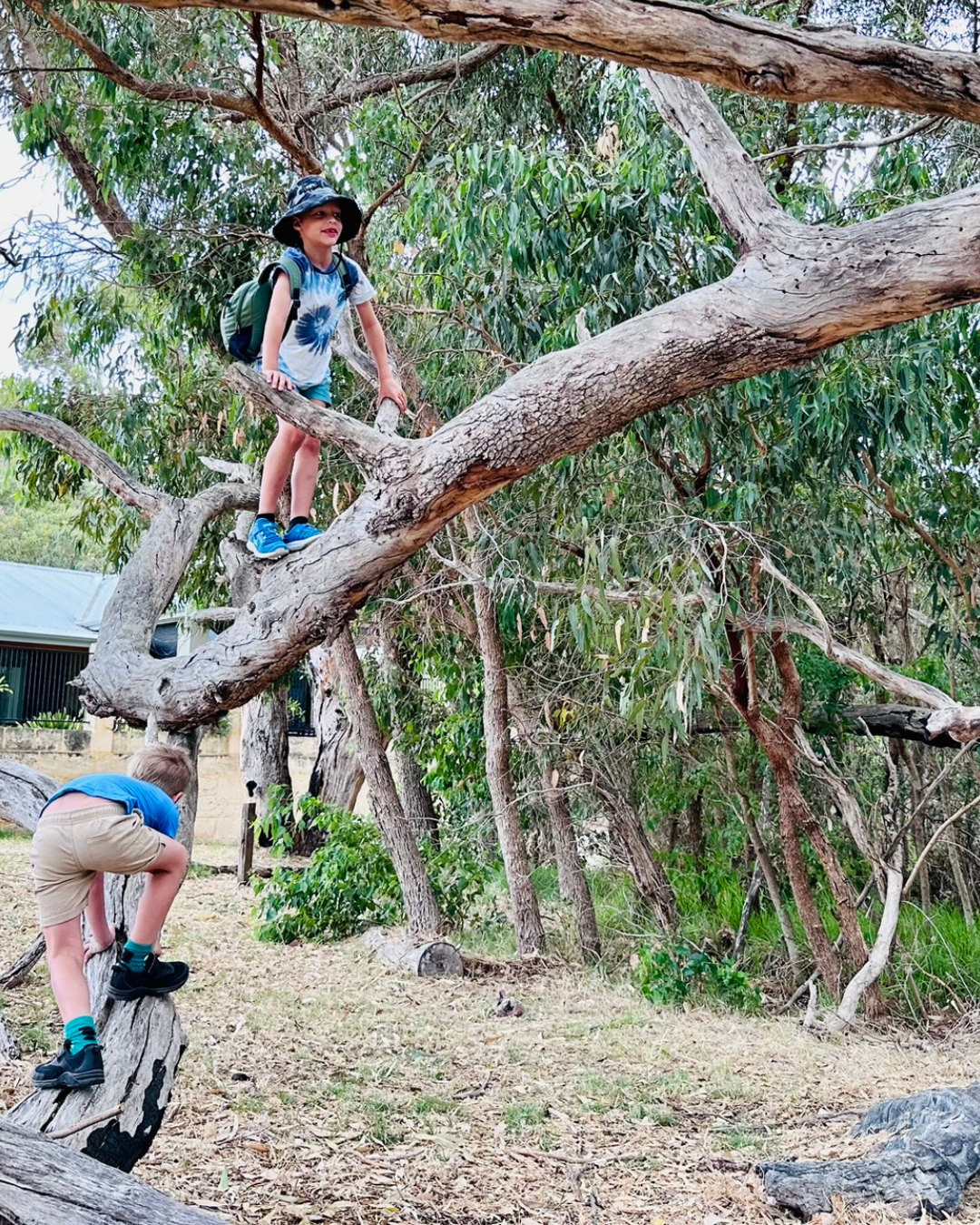
Bearing witness to the joy and sense of accomplishment of a young climber might be a potent enough kind of magic to convince you to reach for a strong and study branch. If nothing else, it’ll make the young climber feel better about their skills when they see you having a go!
If you really love the idea of kids climbing trees, perhaps consider planting a tree for the climbers of tomorrow. You will get the joy of watching the sapling grow and knowing that the benefits of that tree could live on for hundreds of years.
A version of this article was first published in The West Australian on Monday August 14, 2023, under the headline How you can help your kids branch out.