9 Benefits of Nature Play for Babies & Toddlers
I still remember the very first time we took our eldest child to the beach as a baby. As she cautiously scrunched her chubby toes into the damp sand for the first time, the most quizzical expression crossed her face. She didn’t cry – but to this day, I’m fairly sure she really wasn’t very impressed!
Moments like these make you wish babies could explain what they’re experiencing;
- What does this stick taste like?
- Why does this small, green leaf feel different to the big, brown one?
- What is this spiky stuff between my toes?
- Or even, Let me try that again—maybe I’ll like it better this time!
As parents, we witness firsthand our babies’ non-verbal – and sometimes, loudly pre-verbal – responses to the sensory experiences of nature. Whether these responses are positive or negative, they are important to development, with research increasingly backing up what many parents intuitively observe: nature play offers powerful developmental benefits for babies and toddlers.
Why Nature Play Matters in the Early Years
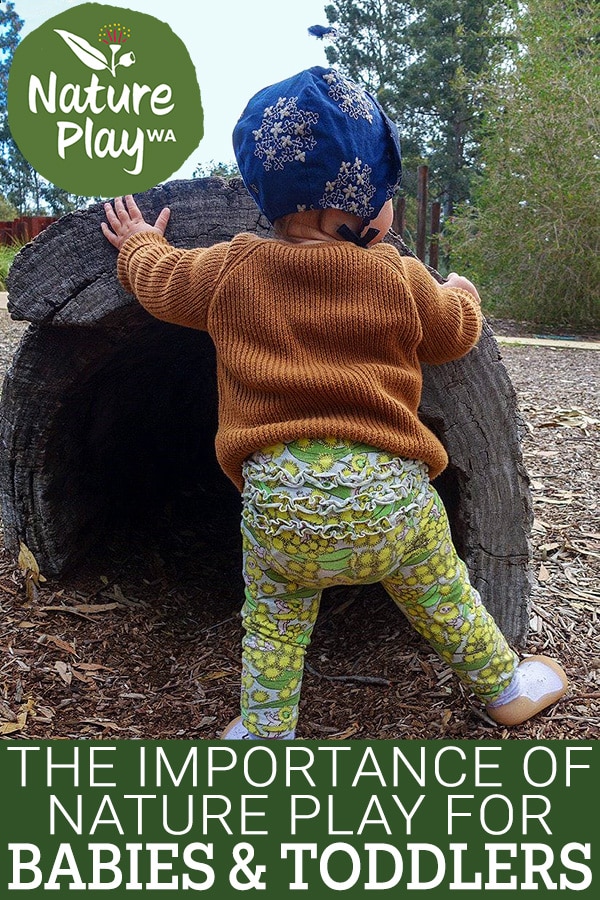
Nature play is more than a simple way to break up the day for parents of babies and toddlers. Regular outdoor experiences support development across all areas and lay important foundations for learning and wellbeing.
In fact, the Early Years Learning Framework (EYLF) for Australia explicitly recommends that children, from birth to five years, have regular opportunities for outdoor play and exploration. Families and educators are recognised as children’s first and most influential educators, and simple outdoor experiences, whether in the backyard or at a local park, align perfectly with EYLF principles by supporting real-world, sensory-rich learning and development.
9 Benefits of Nature Play for Babies and Toddlers
While nature play supports babies’ development in countless ways, below we have highlighted nine key areas where its impact is especially important to young children.
1. Connection and Belonging
The EYLF highlights that play – particularly outdoor and nature-based play – supports children’s sense of belonging, being, and becoming, as play fosters the secure relationships essential to positive social emotional development.
Consider the connection of laughing together with your toddler as you run up the shore together, hand in hand, racing to avoid an incoming wave. Regular outdoor explorations together, like this example, help a child to feel safe and connected, and to experience a positive sense of belonging in the natural world.
2. A Sense of Wonder
For little ones, natural environments inspire awe and curiosity. Noticing the leaves change colour on a tree you see on your regular neighbourhood walk or saying yes to splashing in puddles after a spring rain – these seemingly small moments encourage children to question, explore, and discover, laying a framework for a lifelong love of learning.
Providing unhurried, uninterrupted time is invaluable too – consider the benefit of allowing your toddler time to examine a line of ants marching across a pathway in support of their developing sense of wonder and interest in the world.
3. Sensory Development
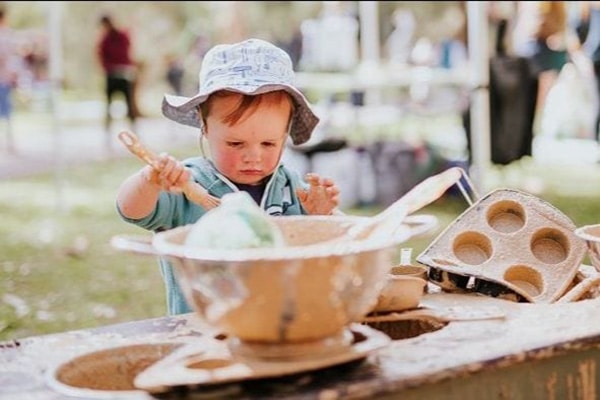
Feeling grass between their toes, hearing the calls of birds, seeing the dance of light or shadows – all of these experiences support the development of sensory processing and motor skills, which you can read more about in our related article, The Science of Mud Play.
Newborns especially benefit from short periods of gentle, sensory stimulation – observing light and shadow, movement, or natural sounds. Verbally narrating what they can see, hear, smell taste or feel, for example “The wind is blowing the leaves in the trees,” to young children further enriches the sensory benefits of these simple interactions.
4. Early Communication Skills
Playing together outdoors, talking about what you can see, reading nature based books and singing nature songs, strengthens both listening and speaking skill development, even with pre-talkers. These interactions support the development of many different verbal skills, including;
- learning to respond to the facial expressions of others,
- using first sounds and words,
- understanding simple commands,
- understanding the meaning of new vocabulary,
- conversation skills, such as turn taking, and
- following verbal directions.
5. Attention & Focus
If you’ve ever observed a toddler being still as they intently watch a snail glide along a pathway, you’ll have seen the power of nature to help hone focus and concentration.
Simple experiences, such as lying on the grass to watch the clouds drift across the sky or a bird glide through the air, provides children with spontaneous opportunities to develop attention through observing and exploring the patterns and movement of nature.
6. Emotional Wellbeing
Time outdoors naturally supports emotional regulation, reduces stress and encourages self-soothing behaviours for all of us – even very young children. A gentle stroll under trees or a quiet visit to a local park can help settle a fussy baby or regulate a cranky toddler, allowing them to absorb the sounds, sights, and smells of nature while feeling safe and supported.
7. Thinking Skills
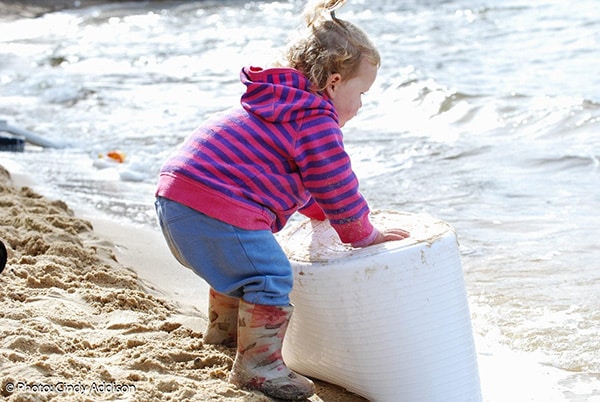
I remember watching my daughter as a toddler pour water from a small bucket over the sand, watching it drain away and then scooping and pouring water again. This type of experimentation builds encourages children to observe cause and effect, develop decision making skills, and exercise their emerging self-control.
8. Resilience
Navigating small challenges in nature, like climbing over uneven surfaces, helps children develop persistence, and resilience. Celebrating your toddler’s attempts to climb a gentle mound or step over a log, even if they stumble, reinforces their ability to overcome challenges.
9. Respect for Nature
Regularly spending time outdoors fosters care and respect for living things. When adults model gentle behaviour, such as observe an insect without harming it or only take flowers that have fallen from a bush, toddlers begin to understand the importance of being kind to the natural world and all its inhabitants.
Making Nature Play Part of Everyday Life
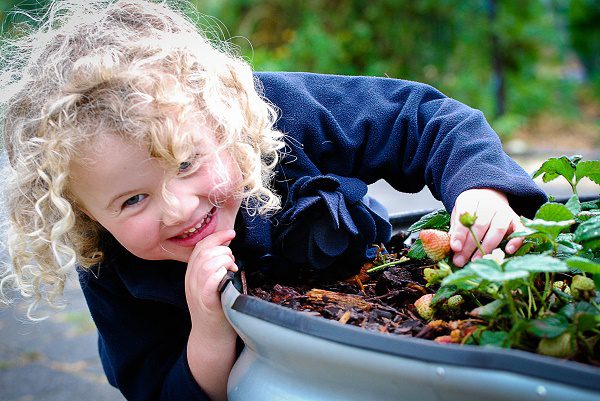
Your presence, encouragement and the gift of regular time outdoors are the most powerful ways you can help your child to experience the full benefits of nature play. Each small moment spent outside builds connection, curiosity, sensory awareness, and emotional well-being. By weaving simple outdoor moments into your family routine, you make it far more likely that nature play happens regularly – and joyfully.
Some simple ways to achieve this include;
- Stepping outside regularly before naptime or after a specific mealtime (e.g. time in the garden after breakfast or an evening family walk after dinner)
- Taking time to observe your garden verge or street when walking to check the mailbox together each day
- Visiting the same park weekly
- Walking around your neighbourhood block each day
- Watering the garden together
Nature Play Ideas for Babies & Toddlers
For even more simple nature play ideas specifically for babies and toddlers, be sure to check out our collection of 30 Things to Do in Nature with Babies & Toddlers.