How To Support Nature Play Everyday: Free Webinar
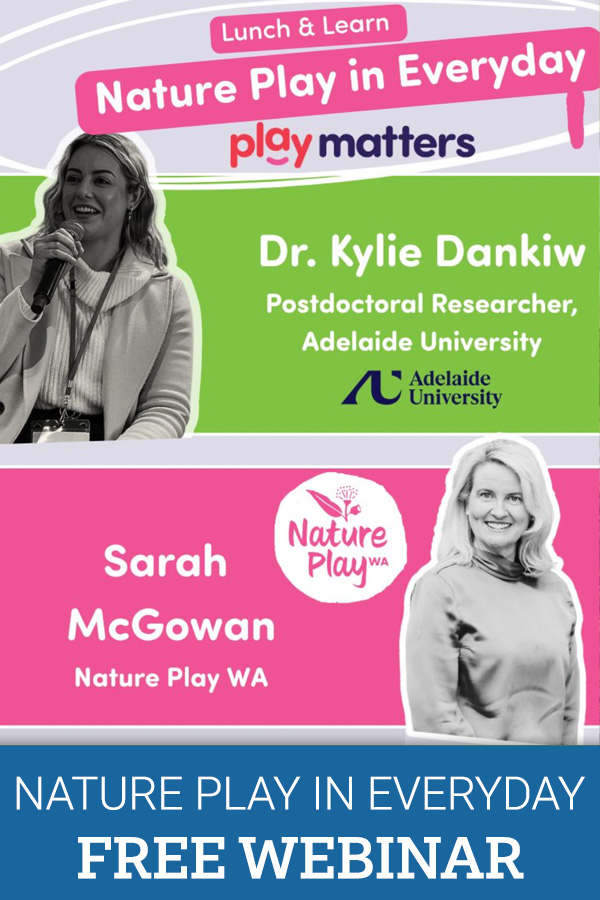
Our Strategic Business Manager, Sarah McGowan, was recently invited to participate in a webinar for parents and early childhood educators and volunteers hosted by Play Matters Australia. The topic: how to support nature play every day.
Designed to be a fun and educational session about incorporating nature play into everyday routines, Sarah was joined by Kylie Dankiw, a Postdoctoral Researcher at Adelaide University.
Key Takeaways from Sarah’s Presentation
As a highly experienced and passionate educator, Sarah’s presentation explores why nature play is so essential for today’s children, the identified benefits, and suggestions for small changes that caregivers can make to affect big changes in children’s play.
A Highlight
A recent study in the US Journal of Paediatrics outlined the causal relationship between a lack of independent play and declining mental health in children and youth. There isn’t a much more esteemed academic publication for children’s health and it wasn’t a suggested link or observed correlation, it was an identified cause.
– Sarah McGowan, Nature Play WA
This positive impact of a young child’s play in nature not only provides health and wellbeing benefits to them as a child, but also to their future self – setting up the individual to be a healthier and more resilient adult.
Taking Action
“So the big question is: what can we actually do about this?” Sarah suggests adults;
- Loosen the reins a little: Allow manageable risk. Let children climb, balance, explore, and test their bodies to build confidence and resilience.
- Prioritise time outdoors: Not as an add‑on, but as a core part of the day. Even 5-10-minute moments in nature can make a positive difference to child wellbeing.
- Shift our language: Instead of ‘Be careful,’ try ‘Do you feel safe?’ or ‘Show me how you’re managing that.’ This helps to build the child’s internal risk assessment skills.
- Simplify the environment: Children don’t need more equipment, just access to natural materials, such as sticks, rocks, water, sand and trees.
- Model curiosity: When adults slow down, notice and wonder, children follow.
- Give children permission to play: Permission to get dirty, to explore, to take risks, to follow their ideas. This fosters independent play, the exact space where wellbeing grows.
Featured Product
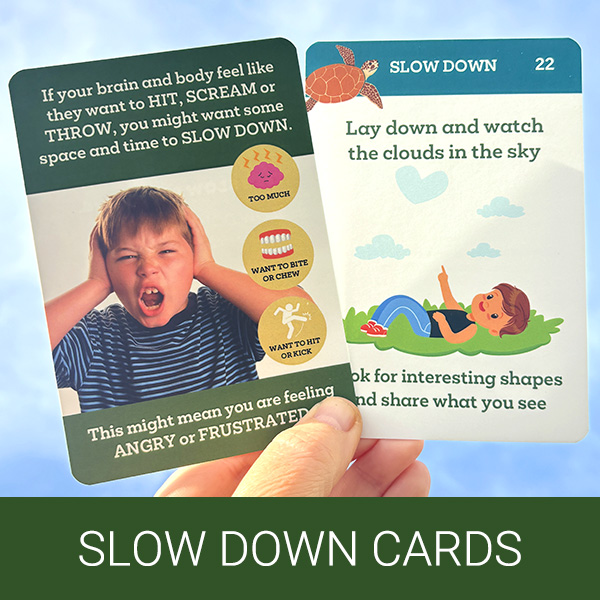
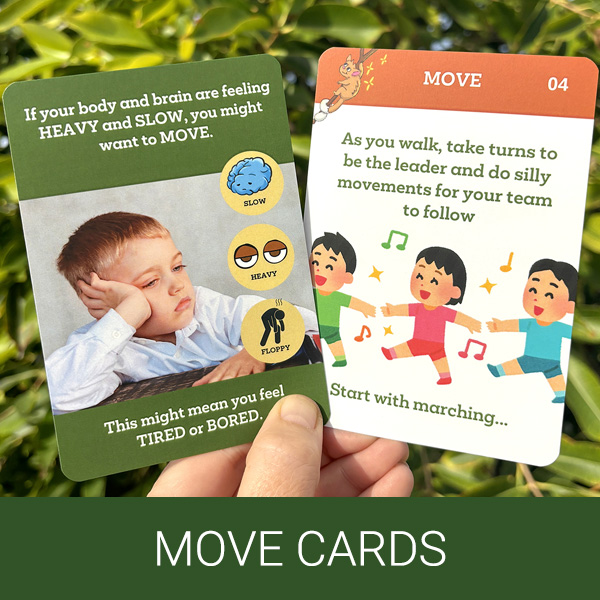
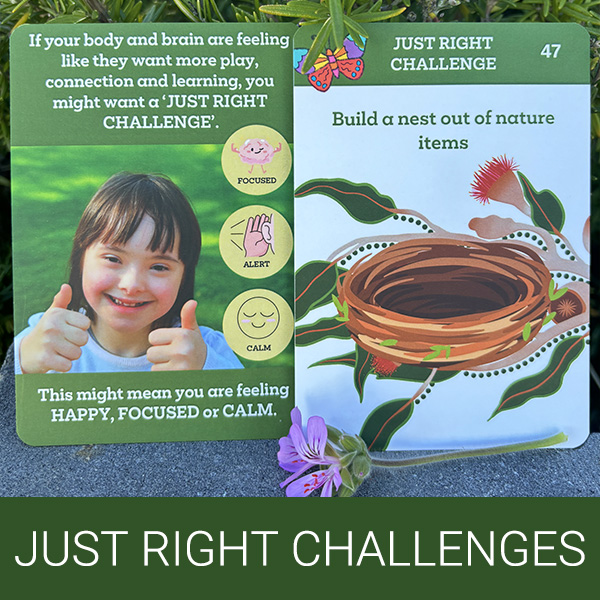
Our Nature & Me cards were created to make nature‑based experiences simple, intentional and accessible.
The activities featured help children slow down, notice, breathe, and reconnect with their bodies and surroundings, and support children to regulate more easily, engage more deeply, and take more risks in their play and learning.
This is just a few of the ways educators in early learning settings across WA are using the Nature & Me cards;
- Supporting children who feel overwhelmed or unsure how to enter play,
- Helping broaden children’s play options, especially for those who tend to repeat the same play patterns or struggle to initiate new ideas, and
- Strengthening relationships through building trust, connection, and emotional safety, with caregivers and peers.
Key Takeaways from Dr Dankiw’s Presentation
Following on from Sarah’s presentation, Dr Dankiw shares some startling findings from her own research, as well as practical suggestions for becoming a champion of daily nature play champion. Addressing the commonly reported barriers to nature play, Dr Dankiw suggests;
- Time: Integrating nature play into the daily schedule, being creative to find pockets of available time.
- Resources: Resources do not need to be elaborate. Start out by collecting natural loose parts around your area and leveraging community connections for additional supplies.
- Weather: Use appropriate cold and wet weather clothing, bring nature play indoors when necessary and advocate for play space upgrades to support all weather play, such as trees for natural shade.
- Safety: Encourage open discussions about the benefits of nature play, and strategies for managing risk with both children and adults. Risk assessments should manage but not remove risk.
Watch the Full Webinar
Running for one hour, you can watch the full Play Matters webinar below.