Parenting the Digital Child – Unplugging and Reengaging
The results are in, and the news isn’t good. The latest report from VicHealth shows teenagers are struggling to do even an hour of physical activity a day and are almost five times more likely to be on their smartphone or tablet than being active.
If you think teenagers are a little outside our regular age-range focus, you’d be right, but as a parent of a 16, 14 and 5 year old, I can tell you that I can remember when the 14 year old was the same age as his younger brother, and I’m pretty sure it was just yesterday.
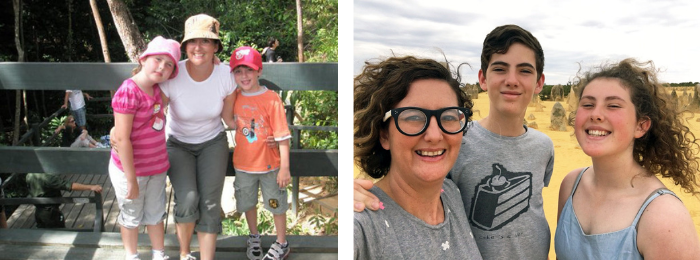
Despite my best efforts, the constant battle to “put the phone down” rages in our house, with two teenagers sometimes seemingly welded to theirs. If it’s not in their hands it’s in their pockets, with fingers itching to wrest it free at the slightest provocation. And then there’s laptops (which they have for school), which can also “miraculously” be used for Instagram, YouTube and mindless web browsing if not monitored.
The phones came about partly as a safety measure (they take the bus home from school, or to after school activities) and partly because I caved after being informed that my teens were the only children in the entire world that didn’t have phones. Possibly an exaggeration, but it did seem that the 14 year old (who just got a phone for Christmas) was one of the very few in his year group without some form of mobile.
And I’m no angel. My phone is often on the go, whether it’s emails, or social media (it’s my job, guys!) following online recipes while preparing dinner, reading the news, or checking emails and messages from school, after school programs, friends and family.
Before the phones came, we were pretty good at managing laptop and ipad use, as they were bigger devices, not so transportable and not as easy to squirrel away. But the phones seem to be all-consuming.
We have rules about devices only being used in the main living areas of the house, and only at certain times, but over the Christmas holidays these seemed to become a little more lax (who wants to be constantly harping about devices?). But now we’re firmly into the new school year, there’s a new sheriff in town (well, it’s the same one, but she has no time for your phone-loving ways).
It came to a head last week, with the discovery of Instagram posts that were liked and commented on by one of the kids, well into the wee hours of the morning. (Remember, when mum follows you on Instagram she sees all!) It was time to pull out the big guns, and utilise our latest weapon in the battle against all-consuming tech – Reduce, Replace, Balance.
It was certainly a case of practice what you preach, and a great way to firm up and reinstate the rules that had always been there, but had gotten a little soft around the edges over the holidays. Among other things. (Why are these work trousers so tight?)
In a nutshell, Reduce, Replace, Balance is Nature Play WA’s tool to assist in managing family device use, while maintaining your sanity and keeping everyone happy. Don’t believe me? Read on…
Step 1 – Reduce
Getting the kids off the devices in the first place might seem like a big challenge, but writing up a plan the whole family has input into can help with that. Setting the rules of use (including when screens are allowed to be used, and when they’re not), is the first step. In our house, devices at the dinner table (and breakfast and lunch) are a definite no-no. Small screens in the hour before bed are out, and all devices are charged in the living room overnight, not in bedrooms. This goes for grownups too, and it’s important that the kids feel they can call us out if we slip up too.
Step 2 – Replace
Expecting kids to refrain from technology and device use entirely is something that the Nature Play WA team doesn’t feel is a realistic aim. Our children use technology at school and for homework, and it’s a way that they keep in touch with their friends; an extra layer to the way they interact socially in a digital world. And technology use doesn’t have to be sitting on your backside on the couch, or hunched over a game console. There’s great active technology to engage kids in the great outdoors. A perennial favourite, geocaching, is great for kids of all ages. This digital treasure hunt is everywhere – you just need to know where to look. With geocaches in pretty much every neighbourhood park, you’ll be surprised at how close your nearest one is, and how addictive the thrill of finding them is!
Visit www.geocaching.com.au for more details, or hunt for Geocaching in your app store.
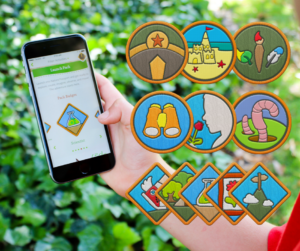 Our very own Nature Passport app has a whole swathe of outdoor activities for children to do – in your backyard, neighbourhood, local park or further afield.
Nature Passport has a large, and growing, suite of outdoor activities including scavenger hunts, micro-hikes, a mud-pie food fight, cubby building, and bug hunts. Users collect badges, do team activities, and record pictures, notes, and audio from their adventures in a digital journal.
The app also has a safari feature that allows users to record animals and species, have them identified by naturalists, and added to one of the world’s largest citizen science projects – iNaturalist.
Find it in your app store. (Apple store or Google Play)
If the weather is bad, you can still stay active indoors. Many gaming consoles have active play, like Wii Fit, Just Dance and many games that utilise motion-sensing technology, through Wii-motes or sensor bars. No gaming console? There are also many active games available on DVD!
All of these activities are ideal for the whole family. Why should the kids have all the fun?
Step 3 – Balance
The final piece of the puzzle is getting the kids to continue their active play without the devices, and spend more time in outdoor, creative play than they spend indoor on the screens. (Our Green Time vs Screen Time resource is helpful in managing this). Even if you have a small backyard, there’s ways of spending time outdoors – riding bikes and scooters (even just around the block), playing with friends down the park, walking the dog, having a spontaneous dance party (always a good thing!) or throwing and kicking the ball around with the folks, is a great way to get active, and build stronger relationships with family and friends.
It sometimes feels like we’re fighting a losing battle for our children, to give them the childhood that we had. Where the only screen time we got in the day was maybe catching Round the Twist after school (if we biked home at breakneck speed), or watching Sale of the Century or A Country Practice in the evening, on the (only) TV, with the whole family.
But nostalgia does us no good. We can lament the advent of 24 hour entertainment, rage against ever-present social media, but they’re not going anywhere. All we can do is acknowledge that our children are growing up in a world very different than our own, but also very much the same.
We still have parks (that are much better designed and maintained than the steel monsters we grew up with), we still have nature reserves, national parks, rivers and beaches, and we still have a neighbourhood to explore (even without the quarter acre blocks). Something we took for granted in the past (kids spending time outdoors) is now something we have to work at. But it’s something we all can do, and the more we do it, the easier it will become. And one day, the first thing out of the kids’ mouths on a Saturday morning won’t be “can I play on the xbox” but “can we build a cubby”? We just need to show them the way.
Katherine Healy is Nature Play WA’s Communications Manager. She is the proud parent to three gorgeous nature players – who just keep growing bigger every day!