Teaching traditional indoor school lessons in nature: The effects on student learning and behaviour
Abstract The natural environment is associated with better behaviour and academic performance in children. However, research to date has been…

Research carried out in Australia or references Australian research

Abstract The natural environment is associated with better behaviour and academic performance in children. However, research to date has been…

Grounded in cultural-historical theory, Playworlds is a model of play pedagogy where children and educators recreate a narrative through dramatization.
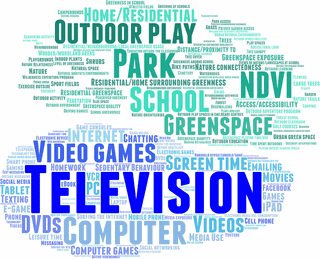
Technological developments in recent decades have increased young people’s engagement with screen-based technologies (screen time), and a reduction in young people’s contact with nature (green time) has been observed concurrently. This combination of high screen time and low green time may affect mental health and well-being.

The majority of adolescents do not meet current physical activity guidelines. Urgent scaling up of implementation of known effective policies and programmes is needed to increase activity in adolescents.

This paper draws on findings of comparative international research on students’ poetic writing about the natural environment in the context of the classroom and a naturalistic setting. The study involved 97, nine- to 10-year-olds in four classes: two classes were in an English primary school with their counterparts in a Western Australian primary school.
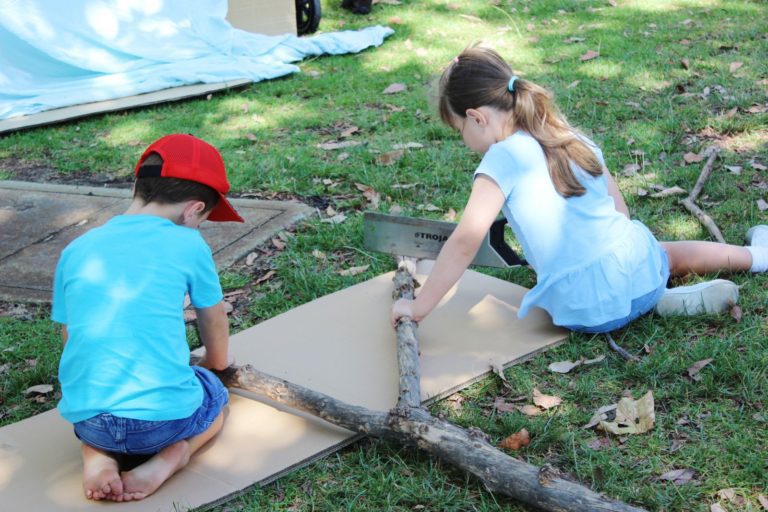
The current study investigated the influence of a play-based curriculum on the development of pretend play skills and oral language in children attending their first year of formal schooling.

Children who are able to play and travel without an adult and those who walk or cycle to school are more likely to meet Australian physical activity guidelines, according to findings from research that investigated the role that parental fear plays in shaping children’s independence and physical activity, the first of its kind in Australia.

A majority of Australian children are spending more than the recommended two-hour daily limit for screen time (watching television, on computers and playing electronic games).

It is often hypothesised that neighbourhood green space may help prevent well-known declines in physical activity and increases in sedentary behaviour that occur across childhood. As most studies in this regard are cross-sectional, the purpose of our study was to use longitudinal data to examine whether green space promotes active lifestyles as children grow older.
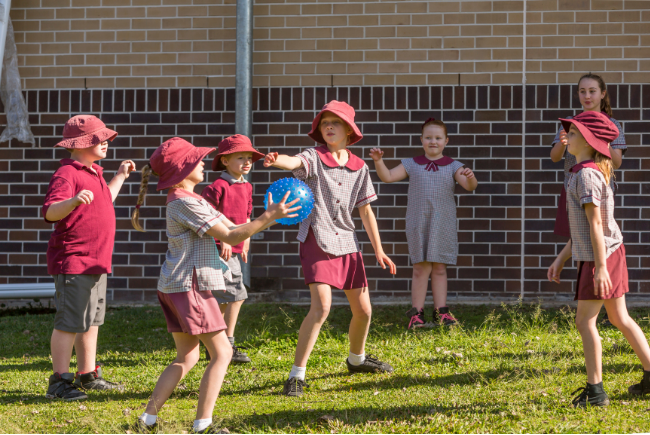
The aims of this paper are to provide normative data for primary school-age children from various regions in Australia, to identify secular trends in the data over three decades, to focus on results for selected schools that have adopted varied levels of commitment to the physical education program and finally, to demonstrate a way forward to improve the fitness and skill levels of children.